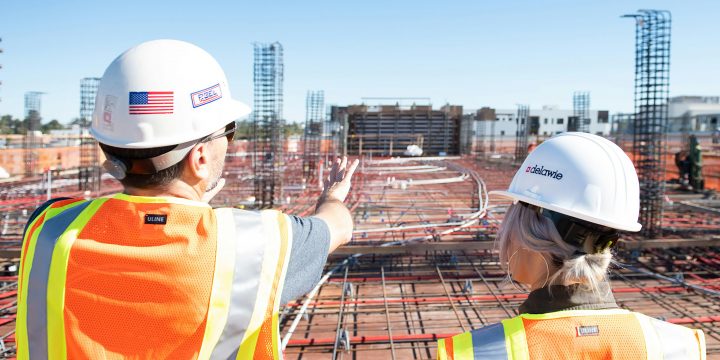
How Sustainable Materials Are Changing Modern Construction

How Sustainable Materials Are Changing Modern Construction

Construction
The construction industry is undergoing a transformative shift. Urbanization, climate concerns, and resource scarcity are driving architects, engineers, and developers to rethink the materials they use. Sustainable construction materials offer solutions that reduce environmental impact, improve energy efficiency, and enhance the durability and well-being of building occupants. For professionals and policymakers alike, understanding these materials is critical to designing the built environment responsibly. The Historical Context of Construction Materials Construction has always mirrored technological and economic realities. For centuries, timber, stone, and brick were the primary materials. The Industrial Revolution introduced steel and reinforced concrete, enabling skyscrapers and large-scale infrastructure. While these materials expanded possibilities, they came with environmental costs: steel and concrete production are highly energy-intensive, contributing to global greenhouse gas emissions. By the late 20th century, environmental awareness…

Read More
7 Innovative Building Techniques Every Contractor Should Know

7 Innovative Building Techniques Every Contractor Should Know

Construction
The construction industry has undergone a remarkable transformation over the past few decades. Advancements in technology, sustainability demands, and the pursuit of efficiency have reshaped how buildings are designed, planned, and executed. For contractors, staying ahead means understanding innovative building techniques that reduce costs, improve quality, and enhance project timelines. This article explores seven groundbreaking methods, providing detailed insights, real-world examples, and practical strategies for implementation. By mastering these techniques, contractors can deliver superior projects while preparing for the future of construction. 1. Modular and Prefabricated Construction Modular and prefabricated construction represents one of the most significant shifts in modern building methodology. Instead of building entirely on-site, modules or components are manufactured in controlled factory environments and later assembled at the construction site. This approach has redefined timelines, labor requirements,…
Read More
The Future of Smart Homes: What Builders Need to Know

The Future of Smart Homes: What Builders Need to Know

Construction
Smart homes are no longer a futuristic concept; they are rapidly becoming the standard in modern residential construction. As technology advances, home automation, energy efficiency, and interconnected devices are transforming the way people live and interact with their living spaces. For builders and developers, understanding the opportunities and challenges of smart home integration is essential. This article examines the current trends, technological requirements, design considerations, and practical strategies that can help construction professionals stay ahead in the evolving market of smart residences. Understanding Smart Home Technology Smart homes rely on a network of devices that communicate with one another and with the homeowner. These systems offer automation, remote control, energy monitoring, and enhanced security. The technology is diverse, ranging from lighting and climate control to advanced appliances and entertainment systems.…
Read More
Key Safety Practices for Every Construction Site

Key Safety Practices for Every Construction Site

Construction, Essays
Construction sites are inherently high-risk environments, combining heavy machinery, elevated work areas, and complex logistics. Ensuring safety is not only a regulatory requirement but also a critical factor in project efficiency, worker wellbeing, and overall operational success. This article explores the essential safety practices every construction site should implement, drawing from industry standards, real-world case studies, and expert insights. The Importance of a Safety-First Culture A strong safety culture forms the foundation of any successful construction operation. It goes beyond mandatory compliance, fostering awareness, accountability, and proactive behavior among all workers. Sites with a safety-first mindset report fewer accidents, higher productivity, and stronger morale. Leadership and Accountability Effective safety practices begin at the top. Project managers, site supervisors, and senior engineers must model safe behavior and enforce clear protocols. When…
Read More
Architecture Without Borders: The World’s Most Unusual Buildings

Architecture Without Borders: The World’s Most Unusual Buildings

Architecture
Architecture is far more than the craft of construction. It is a language — one through which humanity expresses its dreams, technologies, and worldview. If ancient structures were built primarily for survival and function, today’s architecture reaches toward emotion, imagination, and innovation. The buildings of the modern era are no longer just shelters — they are living sculptures, statements of identity, and reflections of our evolving culture. Architecture as Emotion and Energy Unusual buildings are more than creative experiments; they are emotional experiences cast in stone, steel, and glass. They challenge perception and make people feel — wonder, awe, even disorientation. Take the Guggenheim Museum in Bilbao, designed by Frank Gehry. Its titanium curves shimmer in the sunlight, echoing the river and the sky. The building seems to move as…
Read More

Salman Rushdie essay

Fashion
For many years, school textbooks and other various kinds of scientific and encyclopedic publications with a fair amount of contempt and undisguised derogatory irony informed the then Soviet readers that the word "ISLAM" in Russian means "humility, obedience, obedience." At the same time, by direct and indirect ways, it was “proved” wrongly, as if: "... and in fact, such a name is not accidental at all; ISLAM is really nothing more than a religion of subservience, mutual oppression and comprehensive deprivation ..." Today, by the will of fate, seizing the opportunity to tell the truth, we have the right to rightly clarify that in reality the name of the last of the world religions means: "... surrendering to the Will of the Most High Allah, surrendering yourself to the Power…
Read More

Seven exceptions to the rule when an agreement without consideration will be perfectly valid and binding

Construction
Consideration being one of the essential elements of a valid contract, the general rule is that “an agreement made without consideration is void.” But there are a few exceptions to the rule, where an agreement without consideration will be perfectly valid and binding. These exceptions are as follows:1. Agreement made on account of natural love and affection [Sec. 25(1)]:An agreement made without consideration is enforceable if, it is (i) expressed in writing, and (ii) registered under the law for the time being in force for the registration of documents, and is (iii) made on account of natural love and affection, (iv) between parties standing in a near relation to each other. Thus there are four essential requirements which must be complied with to enforce an agreement made without consideration, as…
Read More

7 Important Differences between Public Corporation and a Government Company

Construction
7 Important Differences between Public Corporation and a Government Company are mentioned below: Public Corporation: 1. Public Corporation is an instrument of the State 2. It is created by the statute.3. Once a public corporation is established for certain purpose, it is a very hard to change its sphere and nature of business, unless and until the Parliament or State Legislature amend the original statute. ADVERTISEMENTS: 4. The object of the establishment has some more objectives, such as services.5. Examples: ONGC, RTC, LIC, FCI, Damodar Valley Corpn., etc.6. Prerogative writs can be issued against them.7. Public Corporations are under the control of: Image Source: i.ytimg.com ADVERTISEMENTS: (i) Judicial control;(ii) Governmental control; and(iii) Public control. A Government Company: ADVERTISEMENTS: 1. Section 617 of the Companies Act, 1956 defines a Government company:…
Read More

What is the Importance of Methods Study in Productivity Improvement

Design
As a productivity improvement step, Method Study helps to produce the same output using fewer resources or to produce more with proportionately less inputs. It reduces, if not eliminates waste. Method Study ensures creativity, innovativeness, optimal decision-making power, good organization practices and better communication. The following issues are the essential elements when carrying out a Method Study:1. Economic considerations2. Technical considerations ADVERTISEMENTS: 3. Human reactions Role of Method Study: To summarize the above discussions, we can safely say that role of Method Study is:1. To appraise the purpose and objectives of the organization2. To assess the tasks of the organization ADVERTISEMENTS: 3. To evaluate the communication and control structure of the organization4. To optimize the use of resources of the organization5. To improve procedures, methods and processes of the organization6.…
Read More

Useful Notes on “Capacity Planning”

Design
Capacity planning is done to estimate the requirements of machines and manpower so as to achieve the production targets. In helps to determine capacity and adjustment of capacity matching resource availability, to cope with demand fluctuation.With a stable demand pattern, the task of capacity planning becomes easier, while with a fluctuating demand, the task becomes complicated for obvious efforts required to the optimal utilization of available resources or new resource acquisition, as maybe case.Excess capacity would minimize productivity; whereas, under-capacity would put strain on customer services and long-term growth and profitability of the organization. For effective capacity planning, production and operations managers need to consider factors like, machine standards, production cycle time, labour productivity, multiplicity of shifts, plant efficiency, scheduling delays, maintenance problem, power failure, absenteeism problem, other eventual manufacturing…
Read More