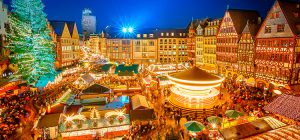
Christmas is not just a religious holiday; it is one of the most significant cultural events worldwide. It unites billions of people—believers and non-believers, adults and children, city dwellers and villagers alike. Today, Christmas has become a complex cultural and economic phenomenon that combines spiritual, familial, tourist, and marketing aspects.
For several weeks, cities transform: streets are illuminated, the scent of cinnamon and pine fills the air, and festive melodies play everywhere. This holiday has become not only a symbol of goodwill and hope but also a powerful driver of creative industries—from fashion and design to tourism and retail.
Historical Roots and Cultural Transformation
Originally, Christmas was celebrated as a Christian holiday commemorating the birth of Jesus Christ. According to the Gospels, Christ was born in Bethlehem, symbolizing the beginning of a new era of mercy, faith, and love. Over time, the holiday spread across the world, absorbing elements of local cultures and folk traditions.
By the 19th century, Christmas began to extend beyond strictly religious contexts. Literature played a major role in this process, particularly the works of Charles Dickens. His famous novella A Christmas Carol reminded society that the holiday’s meaning lies not in wealth but in kindness, empathy, and forgiveness.
By the 20th century, Christmas had become a global cultural phenomenon, blending religious rituals, folk traditions, and elements of popular culture. Today, it is celebrated even in countries where Christianity is not the primary religion—such as Japan, China, and India. In these places, Christmas is perceived as a celebration of light, family, and joy, as well as an opportunity for shopping, social gatherings, and cultural events, highlighting its universal and global appeal.
Christmas Tourism and Global Appeal
One of the most striking aspects of modern Christmas is its transformation into a major tourist attraction. Millions of people travel each year to experience the “true Christmas magic”—whether at European Christmas markets, snowy mountain towns, or urban festivals.
European Christmas markets are among the continent’s most iconic holiday traditions. Germany, Austria, the Czech Republic, and France compete to create the most atmospheric squares, filled with the scents of mulled wine, vanilla, and roasted chestnuts. Nuremberg is famous for its market dating back to the 16th century, while Vienna transforms into a city of lights, where festive bazaars coexist with classical music concerts.
In Scandinavia, Christmas is a celebration of light during the darkest time of the year. Finland is especially popular with tourists because it is home to the “official residence of Santa Claus” in Lapland. Thousands of families travel there annually to meet the legendary figure, ride reindeer sleighs, and enjoy the Northern Lights.
New York and London are considered symbols of “urban Christmas.” Festive window displays, ice rinks, theatrical performances, and giant Christmas trees—such as the one at Rockefeller Center or Trafalgar Square—attract tourists from around the world. The holiday season has become not only culturally significant but also economically crucial, as winter holidays mark peak periods for hotels and restaurants.
Even warmer countries have adapted their ways of celebrating. In Australia and New Zealand, Christmas occurs during the summer, and it is celebrated with beach picnics, sand snowmen, and fireworks over the ocean.
Table: Tourist Destinations and Christmas Features
| Region | Popular Destinations | Features of Celebration | Tourist Highlights |
|---|---|---|---|
| Central Europe | Vienna, Prague, Munich | Traditional markets, street food, orchestras | Historic architecture and artisanal crafts |
| Scandinavia | Lapland, Oslo, Stockholm | Cozy atmosphere, Northern Lights, Santa Claus | Eco-tourism, family-oriented routes |
| USA | New York, Chicago, Boston | Parades, decorations, shows | Urban culture and winter entertainment |
| United Kingdom | London, Edinburgh, York | Theater performances, Christmas tea | Historical castles and street festivals |
| Asia | Tokyo, Hong Kong, Singapore | Light shows, gifts, romantic dinners | Modern technology and culinary tourism |
Commercialization and Marketing Magic
Modern Christmas cannot be separated from its commercial dimension. The holiday season is a critical economic driver, particularly in Western countries. In December, retail sales surge dramatically, and brands compete creatively, producing campaigns that themselves become cultural events.
The history of Santa Claus is a prime example of marketing success. Although rooted in St. Nicholas, the modern red-and-white Santa was popularized by Coca-Cola advertisements in the 1930s. Since then, this character has become a globally recognized symbol of Christmas.
Christmas marketing relies heavily on emotions—warmth, family, gifts, and goodwill. Commercials don’t just sell products; they tell stories that evoke nostalgia. Major brands—from John Lewis in the UK to Disney and Apple—release annual holiday mini-films watched by millions.
Additionally, Christmas drives creative industries: designers launch seasonal fashion and home collections, publishers release festive books, and musicians record holiday albums. In recent years, digital marketing has become increasingly important, with online stores, holiday discounts, interactive calendars, and virtual Christmas markets.
Even in Asian countries where Christianity is not the primary religion, Christmas marketing thrives: decorated store windows, themed cafes, seasonal products, and Santa Claus photo zones attract both youth and tourists.
Cultural Significance and Universal Values
Despite globalization and commercialization, Christmas retains its core message—pursuit of peace, kindness, and humanity. It reminds people to slow down, reflect on the past year, and consider what truly matters.
For many, it has become a time for personal renewal: reflection, gratitude, and reconciliation. Even outside a religious context, Christmas is seen as a celebration of hope and human unity.
Cultural analysts note that in the 21st century, the holiday has become an intercultural symbol, merging traditions from different regions: Scandinavian light festivals, the American concept of “homey comfort,” and Japanese romantic evening aesthetics.
Modern art, literature, and cinema continue to explore Christmas themes. From films like Love Actually and The Holiday to art installations and musical performances, all emphasize that Christmas is a celebration of emotion, not merely ritual.
Christmas and Sustainability
In recent years, increasing attention has been paid to the environmental impact of the holiday. Millions of packaging materials, artificial trees, and flights contribute to ecological strain. In response, many companies and individuals embrace sustainable Christmas practices.
These include using recyclable materials, avoiding plastics, choosing local gifts, and opting for energy-efficient decorations. City administrations implement “smart” low-energy lighting, and travel agencies offer eco-friendly holiday packages.
Thus, modern Christmas is not only a festival of light but also a reminder of responsibility—to nature, society, and future generations.
Conclusion
Christmas has traveled a long path—from a religious observance to a global cultural and economic phenomenon. Today, it blends spirituality and commerce, personal emotions and global traditions, religion and tourism.
For some, it is a time of prayer; for others, a time of travel; and for many, a chance to say “thank you” to loved ones. Yet for all, Christmas remains a moment when the world feels a little warmer and people a little kinder.
This holiday, embracing a diversity of cultures and meanings, proves that despite differences, humanity can still rejoice together—even if only for one day each year when lights sparkle on Christmas trees around the world, including countries where Christianity is not the primary religion.
