Coral reefs are among the most intricate and biologically rich ecosystems on Earth. Often referred to as the “rainforests of the sea,” they provide shelter, food, and breeding grounds for thousands of marine species. Beyond their ecological significance, reefs hold immense cultural, economic, and scientific value. Today, understanding the status of coral reefs and the measures to protect them is crucial, as they face unprecedented pressures from human activity and climate change.
Ecological and Biological Importance of Coral Reefs
Corals are colonial animals called polyps, which live in symbiosis with microscopic algae known as zooxanthellae. This relationship enables corals to obtain nutrients through photosynthesis, which in turn supports the development of calcium carbonate skeletons that form reef structures. These reefs provide complex three-dimensional habitats that sustain about 25% of all marine species, from small invertebrates to large fish and even some marine mammals.
Coral reefs influence their surrounding environments on multiple levels. They act as natural barriers against storm surges, tidal waves, and coastal erosion, protecting human communities in coastal areas. By dissipating wave energy, reefs reduce the impact of storms on shorelines, decreasing property damage and preventing loss of life. On a global scale, coral reefs contribute to the oceanic carbon cycle, sequestering carbon dioxide through the formation of calcium carbonate skeletons. They also support oxygen production via the photosynthetic activity of their symbiotic algae.
Coral reefs also play a critical role in nutrient cycling. By filtering water and supporting diverse populations of fish and invertebrates, reefs help maintain ecosystem stability. This biodiversity is not only essential for marine life but also for human populations relying on fisheries as a primary source of protein.
Historical, Cultural, and Economic Significance
The relationship between humans and coral reefs dates back thousands of years. Coastal communities in the Philippines, Indonesia, the Caribbean, and the Great Barrier Reef region in Australia have relied on reefs for food, building materials, and cultural practices. Corals often hold symbolic meaning in these cultures, representing protection, prosperity, and beauty.
In modern times, coral reefs contribute significantly to global economies through tourism and fisheries. For instance, the Great Barrier Reef generates billions of dollars annually for Australia through diving, snorkeling, and ecotourism. Similarly, coral-based fisheries sustain livelihoods in Southeast Asia and the Caribbean. However, these benefits come with trade-offs; tourism and overfishing, if unmanaged, can directly damage reef ecosystems, illustrating the delicate balance between economic activity and conservation.
Cultural practices also shape conservation approaches. Indigenous communities often have traditional knowledge about sustainable reef use, which can complement scientific strategies. This intersection of culture, economy, and ecology underscores why coral reefs are more than just natural structures—they are living systems with deep societal connections.
 Modern Threats to Coral Reefs
Despite their ecological and cultural importance, coral reefs face multiple threats today:
-
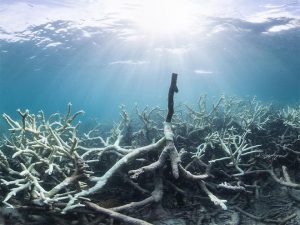
Climate Change and Rising Sea Temperatures: Global warming leads to mass coral bleaching events. When water temperatures rise, zooxanthellae are expelled from coral polyps, causing the coral to lose color and essential nutrients. Prolonged bleaching can result in coral death. Recent events, such as the bleaching of the Great Barrier Reef between 2016 and 2020, demonstrate the scale of the threat, with approximately one-third of corals dying in affected areas.
-
Ocean Acidification: The absorption of excess atmospheric CO₂ by oceans reduces pH levels, weakening the calcium carbonate skeletons of corals. Acidification slows reef growth, making them more vulnerable to storms and erosion.
-
Pollution and Sedimentation: Agricultural runoff, industrial waste, and microplastics increase turbidity, reduce sunlight penetration, and introduce harmful chemicals into reef waters. These factors stress corals, impair reproduction, and increase susceptibility to disease.
-
Overfishing and Destructive Practices: Blast fishing, cyanide fishing, and collection of corals for aquariums or jewelry disrupt reef structures and remove key species that maintain ecosystem balance.
-
Tourism Pressure: Popular reef sites often experience physical damage from boats, anchors, and inexperienced divers, which further accelerates reef degradation.
The combination of these threats has pushed coral reefs into a critical state. Scientific estimates indicate that up to 50% of coral reefs may be lost within the next 30 years if current trends continue, highlighting the urgency for comprehensive conservation strategies.
State-Level Protection and Global Initiatives
Governments and international organizations play a crucial role in protecting coral reefs. Policies and programs aim to balance economic use with ecological preservation, enforce sustainable fishing, and restore damaged reefs. Below is a summary of some prominent state-level initiatives:
| Country/Region | Program/Initiative | Key Measures | Impact/Notes |
|---|---|---|---|
| Australia | Great Barrier Reef Marine Park Authority (GBRMPA) | Zoning to limit human activity, monitoring water quality, tourism regulation | Has slowed degradation in protected zones; reef still affected by climate change |
| Philippines | National Integrated Protected Areas System (NIPAS) | Marine protected areas, community-based reef management, fisheries regulation | Improved fish stocks in many regions, community engagement strengthened |
| Indonesia | Coral Triangle Initiative | Regional collaboration, conservation funding, capacity building | Supports 500+ reef sites; focuses on sustainable livelihoods |
| Belize | Belize Barrier Reef Reserve System | UNESCO World Heritage protection, tourism management, reef restoration | Combines legal protection with ecotourism incentives |
| United States (Florida) | Florida Coral Reef Conservation Program | Reef monitoring, restoration, outreach programs | Supports recovery of endangered coral species and public awareness |
These programs demonstrate a multilayered approach, integrating policy, science, community engagement, and international cooperation. Governments invest in monitoring, enforce fishing restrictions, and fund coral restoration projects. Some countries, like Australia and Belize, also leverage ecotourism incentives, ensuring that local populations benefit economically while maintaining ecological integrity.
Beyond national programs, global initiatives such as the United Nations Sustainable Development Goal 14 (Life Below Water) and the International Coral Reef Initiative provide frameworks for protecting reef biodiversity. Collaborative scientific efforts aim to identify resilient coral strains, track bleaching events, and develop artificial reef structures to enhance restoration.
Strategies for Sustainable Reef Conservation
Conservation of coral reefs requires a comprehensive, multi-pronged approach:
-
Climate Mitigation: Reducing global greenhouse gas emissions is essential to slow ocean warming and acidification. International agreements like the Paris Accord indirectly support reef survival by targeting climate change.
-
Marine Protected Areas (MPAs): Establishing MPAs restricts destructive activities such as overfishing, anchoring, and coastal development. Proper enforcement is key to ensuring effectiveness.
-
Coral Restoration Technologies: Programs like coral gardening, artificial reef structures, and selective breeding of resilient coral strains show promising results. These techniques help accelerate natural recovery and maintain biodiversity.
-
Community Engagement and Education: Local communities are vital stakeholders. Initiatives that provide economic benefits from sustainable tourism or fisheries encourage protective behaviors and long-term stewardship.
-
Scientific Research and Monitoring: Continuous assessment of coral health, water quality, and reef biodiversity enables adaptive management. Monitoring also provides early warnings for bleaching events, allowing timely intervention.
A coordinated effort that combines global climate action, national legislation, technological innovation, and community participation gives reefs a better chance of survival in the face of accelerating environmental change.
Key Takeaways
-
Coral reefs are biologically rich ecosystems that sustain approximately a quarter of marine species.
-
They provide essential ecological services, including coastal protection, nutrient cycling, and carbon sequestration.
-
Historically and culturally, reefs have supported human communities through food, construction materials, and tourism.
-
Major threats include climate change, ocean acidification, pollution, destructive fishing, and unsustainable tourism.
-
Government programs and state-level protection efforts are essential to mitigate human impact and promote restoration.
-
Global initiatives and collaborations enhance reef resilience and facilitate knowledge sharing.
-
Coral restoration technologies, community engagement, and education are critical components of successful conservation strategies.
-
Immediate, coordinated action at local, national, and global levels is necessary to ensure the survival of coral reefs for future generations.
Coral reefs are not just natural wonders; they are vital indicators of ocean health and planetary balance. Their preservation requires combined efforts from governments, scientists, communities, and global organizations. Protecting these underwater ecosystems ensures ecological sustainability, supports human livelihoods, and maintains the cultural and aesthetic values that reefs provide. Only through strategic conservation and responsible stewardship can future generations experience coral reefs in their full splendor.